
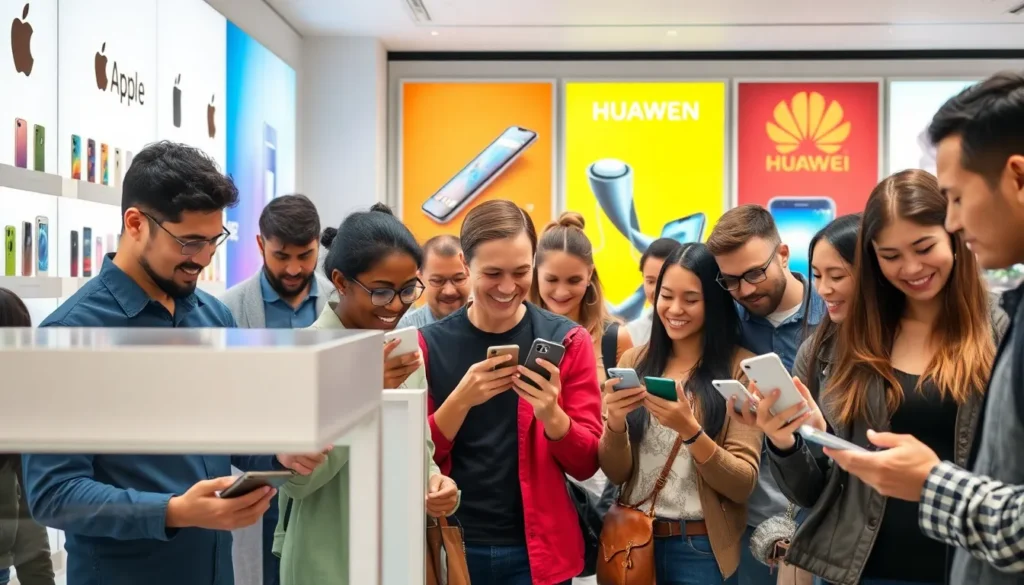

In a world where mobile phones have become an extension of ourselves, choosing the right company can feel like dating—awkward, overwhelming, and full of bad options. With countless brands vying for attention, it’s easy to get lost in a sea of specs, plans, and flashy advertisements. But fear not! There’s a mobile phone company out there that’s ready to sweep you off your feet, minus the cheesy pick-up lines.
Overview of Mobile Phone Companies
Mobile phone companies represent a diverse landscape of brands, each offering various products and services. Some key players dominate the market, including Apple, Samsung, and Huawei. These companies provide consumers with smartphones tailored for different needs, from high-end devices to budget-friendly options.
Apple’s iPhone series leads with premium features and an intuitive ecosystem, appealing to users seeking top-tier performance and security. Samsung offers a wide array of devices, from flagship models to affordable smartphones, catering to a larger audience. Huawei, known for its innovative technology, focuses on high-quality cameras and battery life, attractively connecting with photography enthusiasts.
Numerous smaller brands also compete in this space, such as Xiaomi and OnePlus. These companies often introduce exciting features at lower price points, attracting budget-conscious consumers. Such choices enable buyers to explore various functionalities without overspending.
Emerging technologies further influence mobile phone companies. 5G connectivity expands data capabilities, alongside enhanced photography and artificial intelligence features. Addressing customer needs involves continuous innovation in hardware and software.
Consumer preferences shift alongside industry trends. Users increasingly favor versatile smartphones with robust ecosystems. Moving forward, mobile phone companies must adapt to these evolving demands, ensuring they meet diverse expectations without compromising quality or performance.
Major Players in the Mobile Phone Industry

The mobile phone industry features several prominent companies, each contributing to the competitive landscape with unique products and strategies.
Apple
Apple leads with its iPhone series, known for a blend of premium features and security. High-quality materials characterize its design, appealing to consumers seeking durability and aesthetics. The iOS ecosystem integrates seamlessly with other Apple devices, enhancing user experience. Regular software updates keep devices secure and functional, ensuring long-term satisfaction. Apple’s commitment to quality also reflects in its customer service, often highlighting brand loyalty among users.
Samsung
Samsung offers an extensive range of devices, catering to diverse consumer preferences. The Galaxy series, including both flagship and budget options, attracts various demographic groups. Innovative design elements, such as edge-to-edge displays and foldable technology, showcase Samsung’s commitment to pushing boundaries. Furthermore, strong partnerships with service providers enhance product distribution and accessibility. This versatility allows Samsung to maintain a significant market share globally.
Huawei
Huawei focuses on advanced technology, particularly in photography and connectivity. The brand’s flagship models often feature high-resolution cameras with cutting-edge lens technology. Consumers recognize Huawei for integrating AI capabilities, improving user experience through enhanced performance. Despite challenges in international markets, the company continues to innovate, particularly in 5G technology. Their strong presence in emerging markets highlights Huawei’s resilience and adaptability in a rapidly evolving industry.
Emerging Mobile Phone Companies
New players in the smartphone market continue to reshape consumer choices and preferences. Two notable companies, OnePlus and Xiaomi, are making significant impacts with their innovative products and strategies.
OnePlus
OnePlus emphasizes high-quality devices and aggressive pricing. Known for its flagship killers, the brand offers premium features at competitive costs, appealing to tech-savvy consumers. Their recent models often incorporate cutting-edge technology, such as fast charging and superior display quality. User-focused design enhances the overall experience, and the OxygenOS creates a smooth interface that many users appreciate. Through direct-to-consumer sales, OnePlus targets budget-conscious customers without compromising quality.
Xiaomi
Xiaomi prioritizes affordability while maintaining impressive specifications. Their strategy focuses on providing high-performance devices that compete with established brands, effectively appealing to diverse markets. The Mi and Redmi series showcase their commitment to innovation, particularly in battery life and camera capabilities. Moreover, the extensive ecosystem of products, from smartphones to smart home devices, strengthens customer loyalty and accessibility. Xiaomi’s aggressive marketing tactics, including flash sales, help solidify its position as a leading contender in the mobile phone landscape.
Innovations in Mobile Technology
Mobile technology continues to evolve rapidly, with advancements that redefine user experiences. Key innovations include 5G capabilities and foldable phones, which push the boundaries of what’s possible in smartphones.
5G Capabilities
5G technology offers significantly faster data download and upload speeds, enhancing mobile internet experiences. Integration of 5G allows for seamless streaming of high-definition content and improved gaming performance. Reduced latency improves real-time interactions, making activities like video conferencing more efficient. Companies like Samsung and Huawei are leading the charge, equipping their latest models with 5G support and promoting connected smart device ecosystems. Enhanced capacity supports simultaneous connections, catering to an increasing number of smart devices in homes and cities. As consumers embrace these features, their expectations for connectivity continue to grow.
Foldable Phones
Foldable phones represent a major shift in smartphone design, providing versatility to users. These devices merge the benefits of larger screens with the portability of compact models. Animated interfaces and immersive experiences become possible, allowing users to multitask more effectively. Brands like Samsung and Motorola have pioneered foldable technology, introducing durable hinges and flexible displays for enhanced durability. Consumer reactions indicate a strong demand for this innovation, with many praising the creativity and practicality of foldable devices. The trend emphasizes the importance of adaptability in design, aligning with contemporary needs for flexibility in mobile technology.
Market Trends and Consumer Preferences
Consumer preferences are shifting significantly in the mobile phone market. Versatile smartphones dominate current trends, appealing to users seeking robust ecosystems that enhance functionality. Increased interest in 5G connectivity drives demand for devices that support faster data speeds and seamless integration with smart devices.
Performance and innovation play critical roles in consumer choices. Apple’s focus on security and ecosystem integration sets it apart, while Samsung captivates consumers with a wide range of products that cater to various budgets and preferences. Both brands effectively adapt to changing demands, continuously refining their offerings.
Emerging brands like OnePlus and Xiaomi disrupt traditional market dynamics. OnePlus attracts tech-savvy consumers through high-quality devices offered at competitive prices. Xiaomi’s strategy emphasizes affordability while maintaining strong specifications, making it a popular choice among budget-conscious buyers.
Sustainability increasingly influences consumer decisions. Many buyers now prioritize companies that adopt eco-friendly practices and create devices with long-lasting durability. Mobile phone companies responding to this trend gain a competitive edge, reinforcing brand loyalty.
Photography advancements also play a vital role in shaping preferences. Consumers favor smartphones equipped with superior cameras and AI features, allowing them to capture high-quality images and videos. Brands such as Huawei excel in this area, showcasing their commitment to innovation.
Overall, the mobile phone landscape continues to evolve, driven by technological advancements and changing consumer priorities. Companies that effectively address these trends position themselves for success in an ever-competitive market.
Navigating the mobile phone market can be daunting with so many brands and options available. However it’s clear that certain companies consistently rise to the occasion by understanding consumer needs and preferences.
Brands like Apple and Samsung continue to innovate while providing robust ecosystems that enhance user experiences. Emerging players like OnePlus and Xiaomi are also making their mark by offering high-quality devices at competitive prices.
As technology advances and consumer priorities shift towards sustainability and enhanced functionality the mobile phone industry will keep evolving. Companies that prioritize innovation and adaptability are likely to thrive in this dynamic landscape.